S690QL: High-Strength Structural Steel Plate for Demanding European and Middle Eastern Projects
Modern heavy engineering projects need steel that can carry high loads without making structures unnecessarily heavy. S690QL is a high-strength quenched and tempered structural steel grade developed for applications where strength, toughness, and dependable fabrication performance are important. It is widely considered for cranes, lifting equipment, construction machinery, mining equipment, transportation structures, and other heavy-duty fabricated components.
For procurement teams across Europe and the Gulf region, selecting the right structural steel involves more than comparing prices. Material certification, thickness, mechanical properties, impact performance, traceability, and compliance with the required standard all influence the final purchasing decision.
What is S690QL?
S690QL is a high-strength structural steel grade specified under EN 10025-6, which covers hot-rolled flat products made from weldable fine-grain structural steels in quenched and tempered conditions. The grade designation identifies structural steel with a nominal minimum yield strength level of 690 MPa for applicable thickness ranges, while the “QL” designation relates to its specified low-temperature impact toughness requirement.
The material is particularly useful in heavy structures where conventional structural steel may not provide the required strength. By selecting a higher-strength grade, engineers can sometimes reduce the thickness of structural components while maintaining the required design strength. This can lower component weight and improve handling, transportation, and equipment efficiency.
Typical applications include crane components, lifting equipment, heavy construction machinery, mining machinery, industrial structures, transportation equipment, bridges, and large welded assemblies.
The exact mechanical properties depend on plate thickness and the requirements of the applicable standard. Procurement teams should always verify the material certificate and project specification before approving the steel.
Common International Standards Used Alongside S690QL
The primary product standard associated with S690QL is EN 10025-6. European buyers generally specify the grade together with plate thickness, dimensions, delivery condition, mechanical properties, impact testing, and inspection requirements.
EN 10204 is also relevant when inspection documentation is required. Industrial projects commonly request an EN 10204 3.1 certificate containing traceable chemical and mechanical test information.
Where ultrasonic examination is part of the purchase specification, EN 10160 may be applied to steel plates requiring internal quality inspection.
Buyers should not assume that ASTM, ASME, DIN, JIS, or UNS grades are direct equivalents of S690QL. If an alternative grade is being considered, engineers should compare chemical composition, yield strength, tensile strength, elongation, impact toughness, thickness range, heat treatment, and certification requirements.
This is especially important for European projects where compliance with the specified EN grade can be a contractual requirement.
Why European Buyers Choose S690QL
European engineering companies often require high-strength steel for equipment that must withstand substantial loads while keeping overall structural weight under control. S690QL can provide a suitable solution for these requirements when the grade matches the engineering design.
Welding requirements also deserve attention. S690QL is designed as a weldable structural steel, but fabrication should follow an appropriate welding procedure. Preheating, heat input, interpass temperature, consumable selection, joint preparation, and cooling conditions should be considered based on plate thickness and the approved fabrication procedure.
For European procurement departments, documentation and traceability are equally important. Heat numbers, inspection certificates, mechanical test results, chemical analysis, and additional testing should correspond clearly with the supplied plates.
Finding Reliable S690QL Suppliers
Finding the right supplier is important when sourcing high-strength steel for critical industrial projects. A supplier should understand the technical requirements rather than simply quote a material price.
For buyers sourcing through India, an Authorised Distributor Of S690QL Plate in India can be considered when the project requires specific dimensions, certification, inspection support, and reliable coordination with international customers.
European buyers in Germany, France, Italy, Spain, the UK, Belgium, and the Netherlands may require detailed documentation before approving material. Similar requirements are common among industrial buyers in Saudi Arabia, the UAE, Qatar, Kuwait, Oman, and Bahrain.
A professional supplier should be able to discuss:
- S690QL grade and EN 10025-6 requirements
- Required thickness, width, and length
- Material certification
- Heat number traceability
- Chemical and mechanical test reports
- Impact testing
- Ultrasonic testing where specified
- Third-party inspection requirements
- Export packing and marking
- Shipping and delivery requirements
What Buyers Usually Check Before Ordering
Before placing an order, procurement teams should confirm the exact material designation and applicable standard. The purchase order should clearly identify S690QL according to EN 10025-6 and include any additional testing or inspection requirements.
Plate thickness is another major consideration because the applicable mechanical properties depend on the thickness range. Buyers should review yield strength, tensile strength, elongation, and impact toughness against the required specification.
Certification should be discussed before the order is finalized. Depending on the project, buyers may request EN 10204 3.1 documentation, ultrasonic testing, third-party inspection, or additional quality reports.
For projects requiring specific quantities or sourcing assistance, an Authorised Trader Of S690QL Plate in India can help coordinate material availability, dimensions, documentation, and delivery requirements.
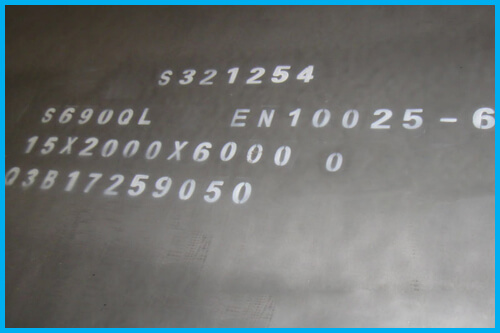
International buyers should also review plate marking, heat identification, packing method, shipping terms, export documents, and expected delivery schedules before confirming the purchase.
Global Demand for S690QL
The demand for high-strength structural steel is closely connected with the growth of heavy engineering, construction equipment, lifting systems, transportation, mining, and industrial fabrication.
Across Europe, S690QL is relevant to manufacturers producing cranes, lifting machinery, heavy vehicles, construction equipment, industrial structures, and specialized fabricated components. Its high-strength characteristics can help engineers develop lighter structures where the design permits such an approach.
The Gulf and wider Middle East also have strong applications for high-strength structural steel. Large infrastructure projects, construction machinery, cranes, industrial plants, material-handling systems, and heavy fabrication facilities can require structural plates with high yield strength and controlled toughness.
Markets such as Germany, the UK, France, Italy, the UAE, Saudi Arabia, Qatar, Kuwait, and Oman place considerable importance on technical documentation and specification compliance for industrial steel procurement.
For buyers looking to source from India, selecting an Autorised Supplier Of S690QL Plate in India can be useful when specific material specifications, inspection documents, quantities, and export requirements need to be coordinated. Buyers should always verify the supplied material against the project specification and relevant certification.
Looking for S690QL?
S690QL requirements can be sourced through Vandan Steel & Engg. Co. for applications involving heavy machinery, cranes, lifting equipment, construction equipment, mining systems, transportation structures, and industrial fabrication. Buyers can discuss required thicknesses, dimensions, quantities, certification, inspection requirements, and delivery destinations to match the material with their project needs.